
The Royal Palace of Naples
The Royal Palace of Naples
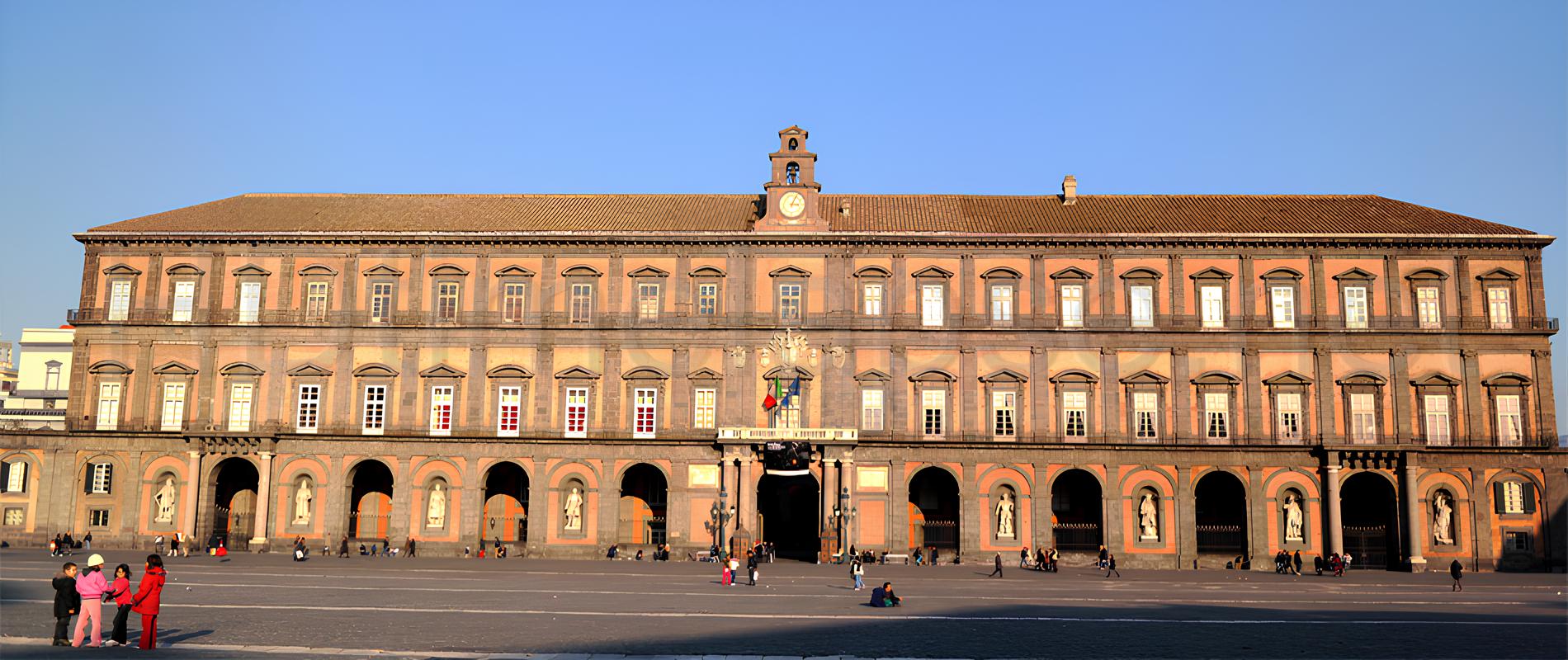
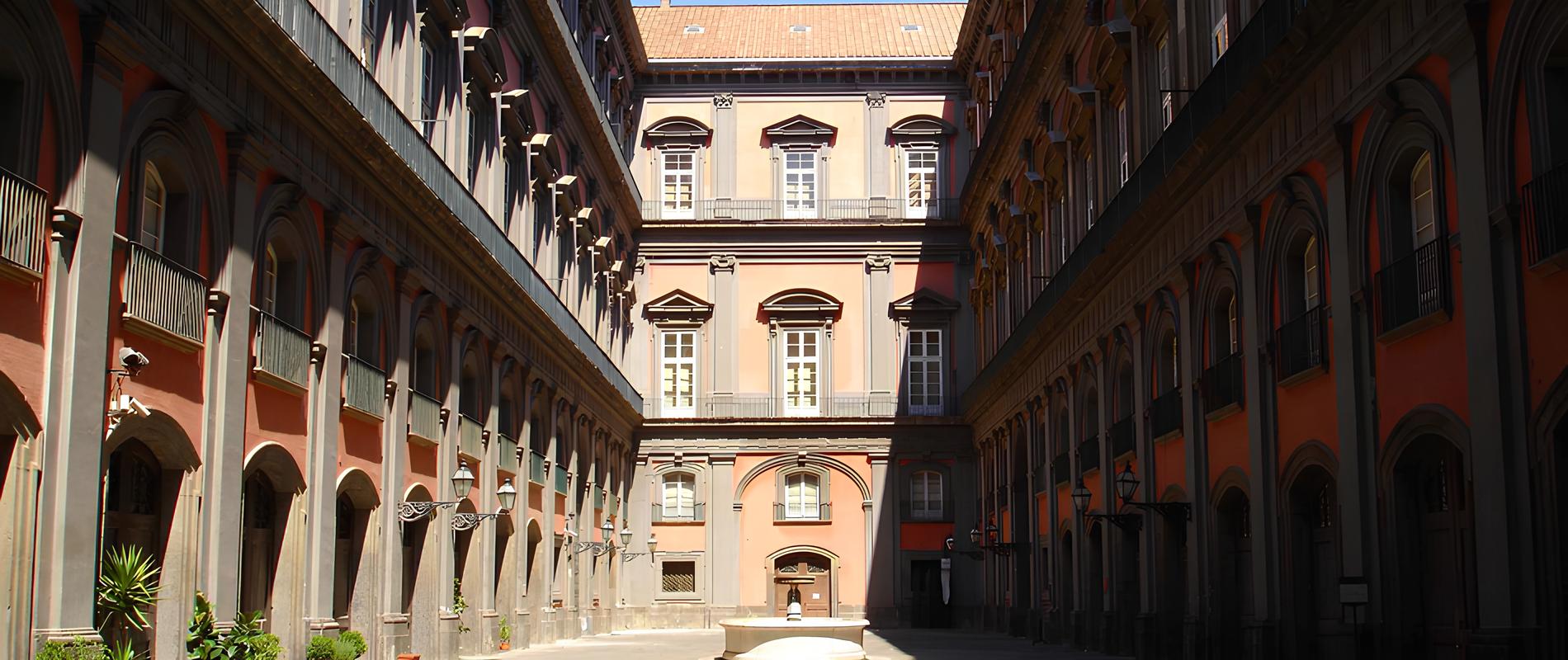
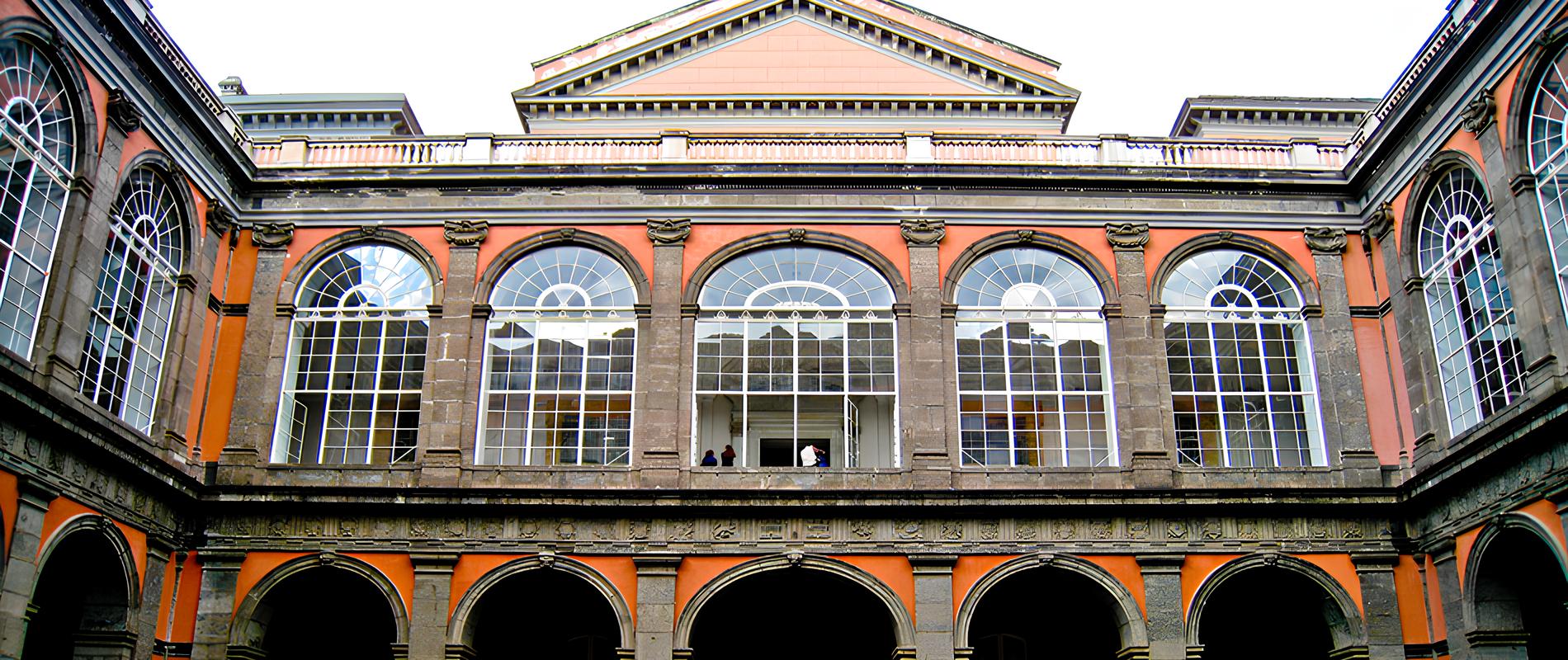
The Royal Palace of Naples, as everyone knows, is not the work of the Bourbons. It was commissioned—in anticipation of a visit to the Viceroyalty (a visit that never took place) by the new King of Spain Philip III of Habsburg (the son of Philip II)—by the Spanish Viceroy Fernando Ruiz de Castro, who began construction in 1600.
We devote attention to this structure because the Bourbons extensively renovated and embellished the palace and the entire surrounding area, which only under Ferdinand II assumed the enchanting appearance it still has today.

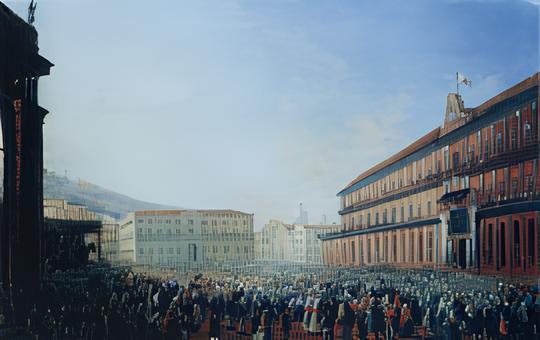
Watercolor, Giacinto Gigante, 1854
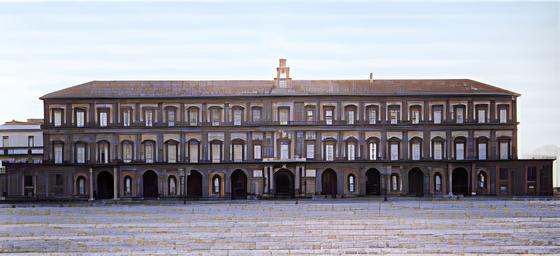
The Palace was to rise in the vast area between Santa Lucia and Castelnuovo; the general project was entrusted to one of the most celebrated architects of the time, Domenico Fontana, already the author of the great works of Pope Sixtus V in Rome; but work continued for decades, and in many cases Fontana’s original design was altered.
Nevertheless, throughout the seventeenth century, the palace, with its great “Largo di Palazzo,” was the beating heart of Neapolitan political and social life.
The Interventions of Charles and Ferdinand IV (I)
Upon King Charles’s arrival in 1734, the palace was in a state of abandonment and entirely lacking the necessities to accommodate the King and his Court, to the point that recourse had to be made to the Monte di Pietà and private individuals to purchase furniture, draperies, and furnishings [Cf. A. BORRELLI, Il Palazzo nei secoli, in Il Palazzo Reale di Napoli, Arte Tipografica, Naples 1987, pp. 23-32 (p. 29). See also: Il Palazzo Reale di Napoli, edited by the Soprintendenza per i Beni Ambientali e Architettonici di Napoli e Provincia, Electa Napoli, Elemond Editori Associati, 1995. We draw the information from these works].
The architect Ferdinando Sanfelice was commissioned to build an apartment for the Lord High Steward on the eastern wing toward Castelnuovo; in 1742, he then carried out other restorations together with the chamber engineer Casimiro Vetromile.
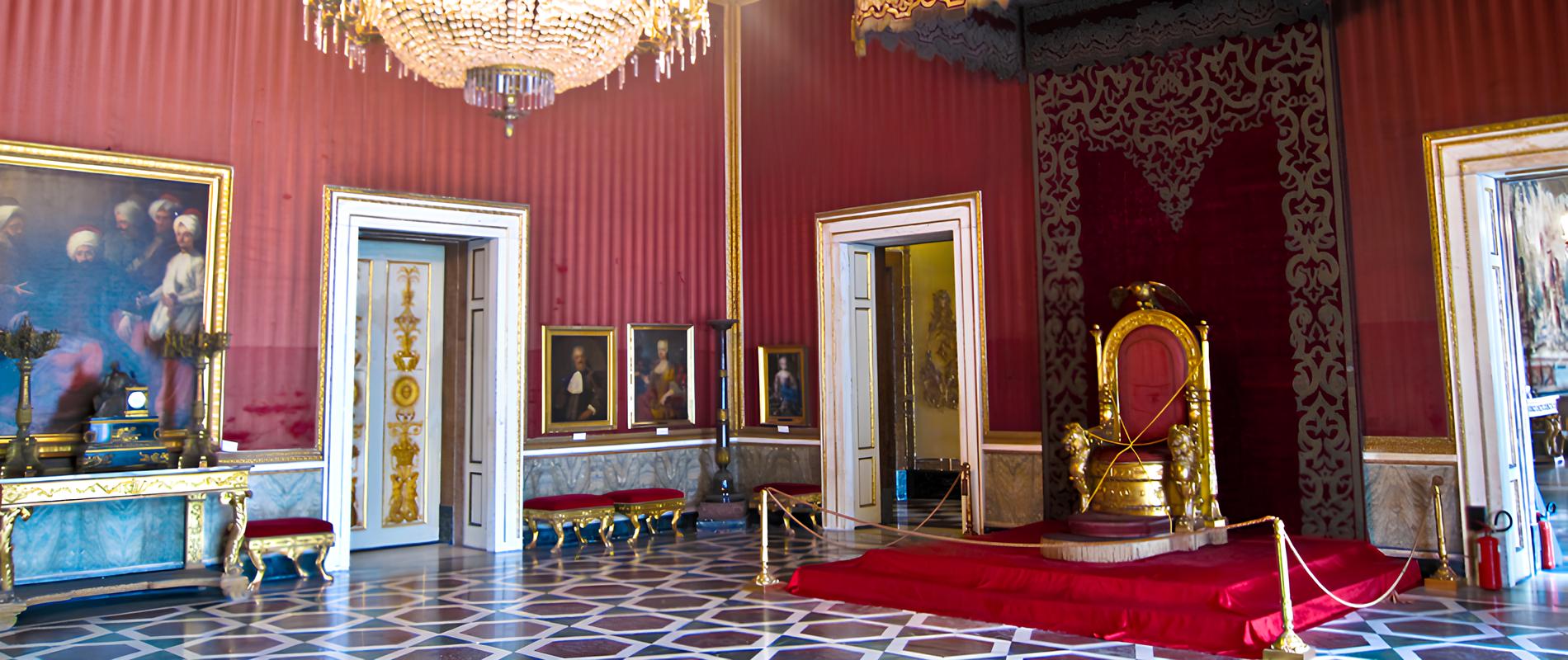
In 1736 the transfer of the Farnese collections began, later partly moved to Capodimonte. For the King’s marriage to Maria Amalia of Saxony, the finest artists present in Naples were summoned to Court in 1737 to decorate some parts of the Palace (particularly the Diplomatic Hall, also called the First Antechamber of His Majesty); among others we recall: Francesco Solimena, Francesco De Mura, Nicola Maria Rossi, Domenico Antonio Vaccaro.
In the same year a porcelain factory was inaugurated, the first “sketch” of what would later become the glorious Capodimonte factory.
In 1751 the Royal Palatine Press began operations, enriched with the machinery of the celebrated printing house of Raimondo di Sangro, Prince of Sansevero, while in 1753 Vanvitelli was entrusted with the restoration of Fontana’s façade.
But, to tell the truth, King Charles was never truly attached to the Royal Palace, although he lived there, probably both because it was too subject to the chaotic life of the capital and because it was not “his” construction. In his mind and heart there were already two other palaces, Caserta and Capodimonte: therefore only under Ferdinand IV did work resume.
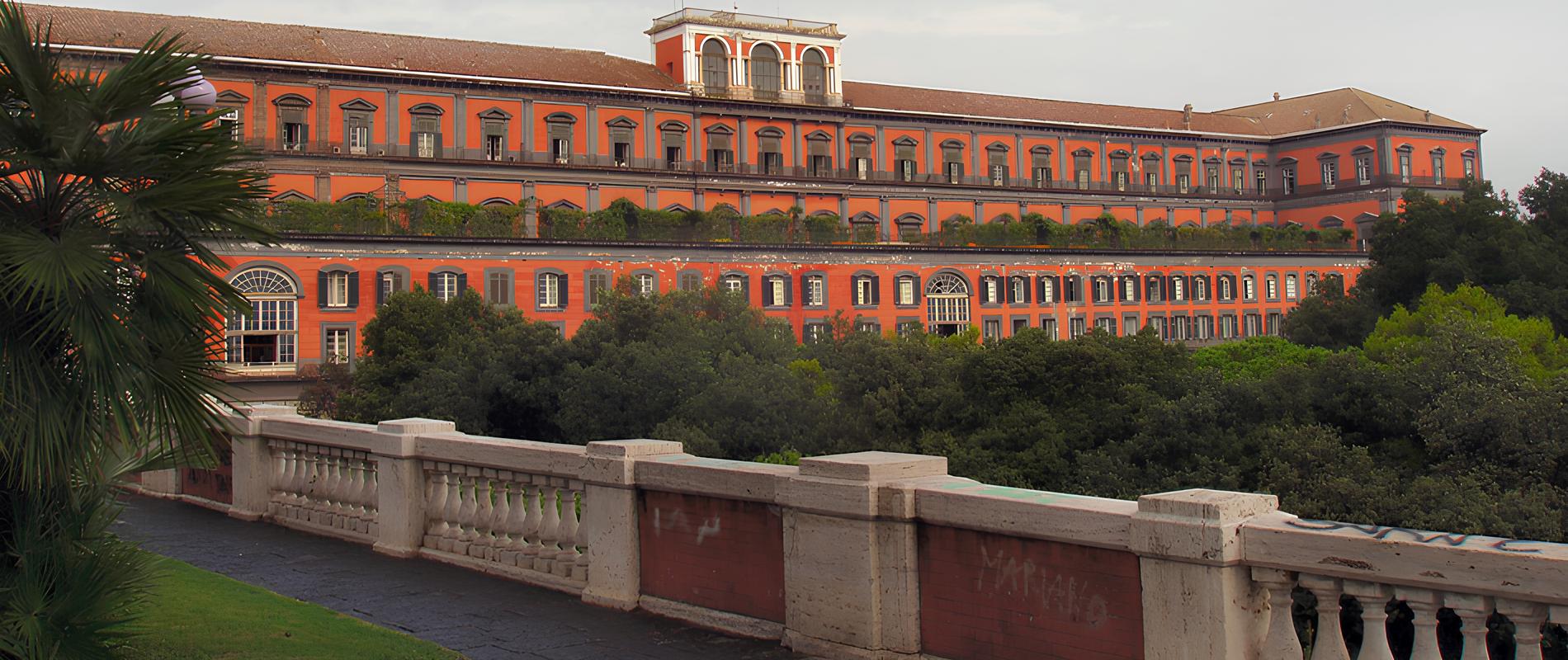
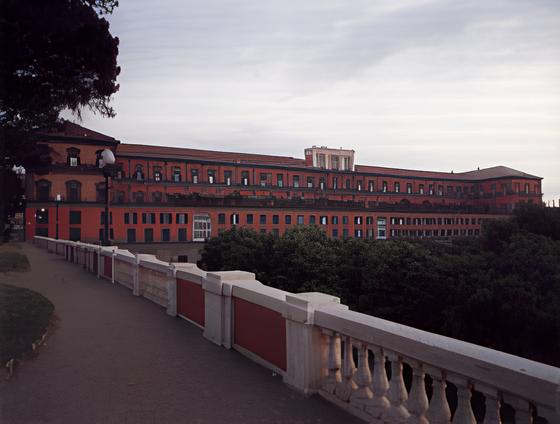
The long building wing toward the east, the New Wing, was constructed, occupying much of the gardens, where the National Library is currently located; construction of the front facing the sea was then begun—which remained incomplete, however—and the first six bays of balconies were realized.
In 1769 Ferdinando Fuga definitively transformed the Great Hall of the Spanish Palace, used by the Viceroys for performances, into a permanent Court Theater, inaugurated with a Serenata or theatrical musical festival by G.B. Sassi with music by Giovanni Paisiello. The theater hosted especially special performances for the King by Nicola Piccinni, Domenico Cimarosa, and Paisiello.
Also under Fuga’s direction, in the 1770s the halls were decorated; to this phase belong the painted doors of the palace and the tapestries of the Royal Factory still preserved today.
In 1773 the King had adapted the ground in front for military exhibitions, designating the Castle Square for the traditional popular festivals that were previously organized in that place.
In 1767 the Military College was founded, in 1778 the Academy of Sciences and Letters, and in 1785 the arrangement of the Great Archive was initiated. The Porcelain Workshop was also restored in the riding school courtyard, after Charles had taken everything to Capodimonte: the direction was entrusted to Domenico Venuti in 1781. Finally, in 1782 Ferdinand inaugurated a Steel Factory with Viennese masters, also directed by Venuti.
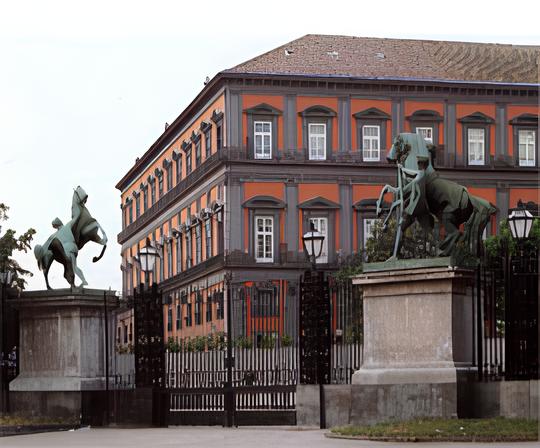
After 1815, Ferdinand I wanted Canova at Court, commissioning from him a statue of Charles; in 1819 Canova also received the commission to make one of the King himself; but by then the artist was old and ill, and could only model the horse; the statue was completed by Antonio Calì: the two monuments were then placed in the square in 1829.
The General Reform of Ferdinand II
A general restructuring of the palace occurred, as always, under the reign of Ferdinand II [We draw the information from Il Palazzo Reale di Napoli negli anni di Ferdinando II. La riforma generale, le tappezzerie, edited by N. D’ARBITRIO-L. ZIVIELLO, Ministero per i Beni e le Attività Culturali, Soprintendenza per i Beni Ambientali a Architettonici di Napoli e Provincia, Palazzo Reale – Napoli, (with the contribution of Their Royal Highnesses the Duke and Duchess of Calabria and of the S.M.O. Constantinian of Saint George), Edisa, Naples 1999, pp. 9 ff].
From the early years various projects were conceived; then in 1836 the Lord High Steward Prince of Bisignano, with a Royal Rescript, ordered a general census of the Royal Palace, in order to “set hand to the forthcoming works,” planned for the following year. “In this way, at least on a formal level, one of the most complex architectural interventions undertaken by the Bourbons began, which would conclude almost emblematically shortly before the death of Ferdinand II” [Ibid., p. 10].
Ferdinand II’s policy aimed to centralize the various powers of the state within the Palace, intending thereby to recover a model of representative architecture, organically immersed in the urban fabric, visible and recognizable in its function” [Ibid., p. 11].
The work was truly enormous, as it involved tearing down the disorderly construction that had stratified over time, which had caused the survival of disparate activities within the palace walls and even the settlement of family units that passed down the right of residence.
But the aspect that ended up imposing itself was undoubtedly the need to subject the “General Reform” to the innovations—which were gradually asserting themselves even in Naples—of the first Industrial Revolution.
“Technological development could not fail to affect the “Reform” works of the Palace, since it was grafted onto a global vision of a Palace that would be not only representative, but also an expression of its times, with an openness toward new technologies, deemed indispensable to compensate for the deficiencies of artisanal systems, which unchanged had survived until the beginning of the century” [Ibid., p. 12].
Thus a radical modernization of facilities and services was planned, according to the efficiency criteria typical of nascent industrialization: gas lighting was introduced, advanced running water distribution systems, a steam engine for hydraulic services, a new drainage and sewage network, ribbed zinc sheets replacing tiles, advanced foundry products employed for the construction of the Belvedere Bridge and for the supports of lighting systems, waterproof plastic compounds for critical joints, glass and mirrors with protective varnishes, etc.
All this occurred under the constant supervision of the King, who created special commissions throughout the two decades of the “Reform’s” realization. Ferdinand II chose as architect—in place of Antonio Niccolini, the favorite of Ferdinand I and Francis I—Gaetano Genovese, who “studied and designed a renovation of the Palace on a grand, most comfortable and beautiful plan, which he presented to His Majesty the King” C.N. SASSO, Storia de’ Monumenti di Napoli, cited in ibid., p. 15., which then substantially recovered Fontana’s idea, and which responded to the King’s conservative vision.
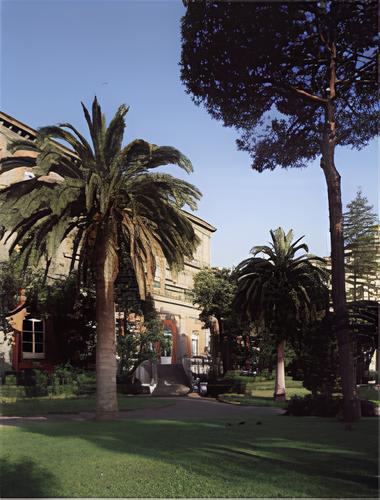
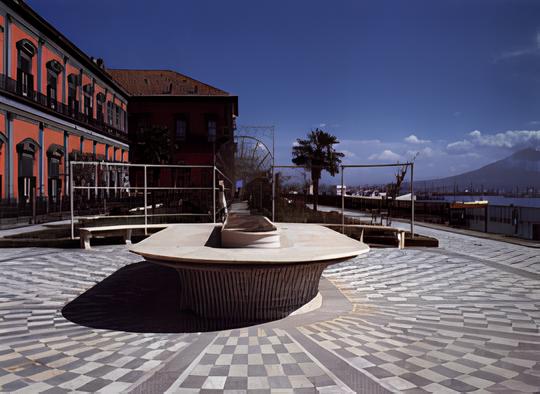
Also to be remembered is that in the second half of the 1840s, once the royal apartments were made accessible, there was the “reduction” to an English garden—”sinuous and penetrating just as the tendency of Romantic culture suggested” [Il Palazzo Reale di Napoli negli anni di Ferdinando II, cited, p. 53.]—of the large riding school, under the direction of the “botanical gardener” Federico Dehnhardt and the assistance of the botanist Gussone, which was counterpointed by the neoclassical hanging garden of the Belvedere Loggia, which, suspended in the void, overlooked the enchanting scenery of the Gulf.
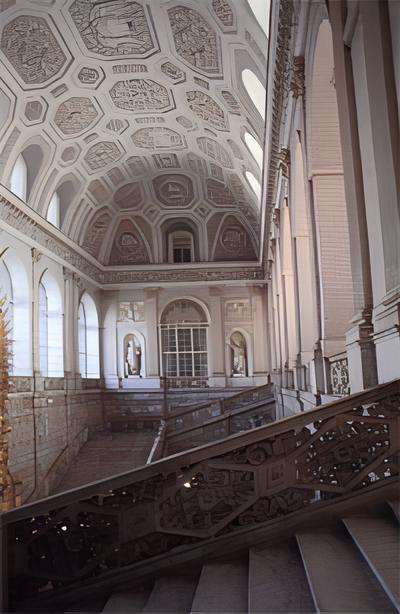
Finally to be remembered are the marvelous “Great Staircase” with the Great Covering Vault, the furnishings, and the precious carpets (produced partly in Belgium and partly in San Leucio).
One of these carpets was recently restored through the initiative of Their Royal Highnesses Princes Carlo and Camilla of Bourbon of the Two Sicilies, Duke and Duchess of Castro.